 frontdesq
How tradies can answer customer calls safely while on the tools
Why hands-free isn't distraction-free, and how driving, working at height and live electrical work each change the answer.
Driving
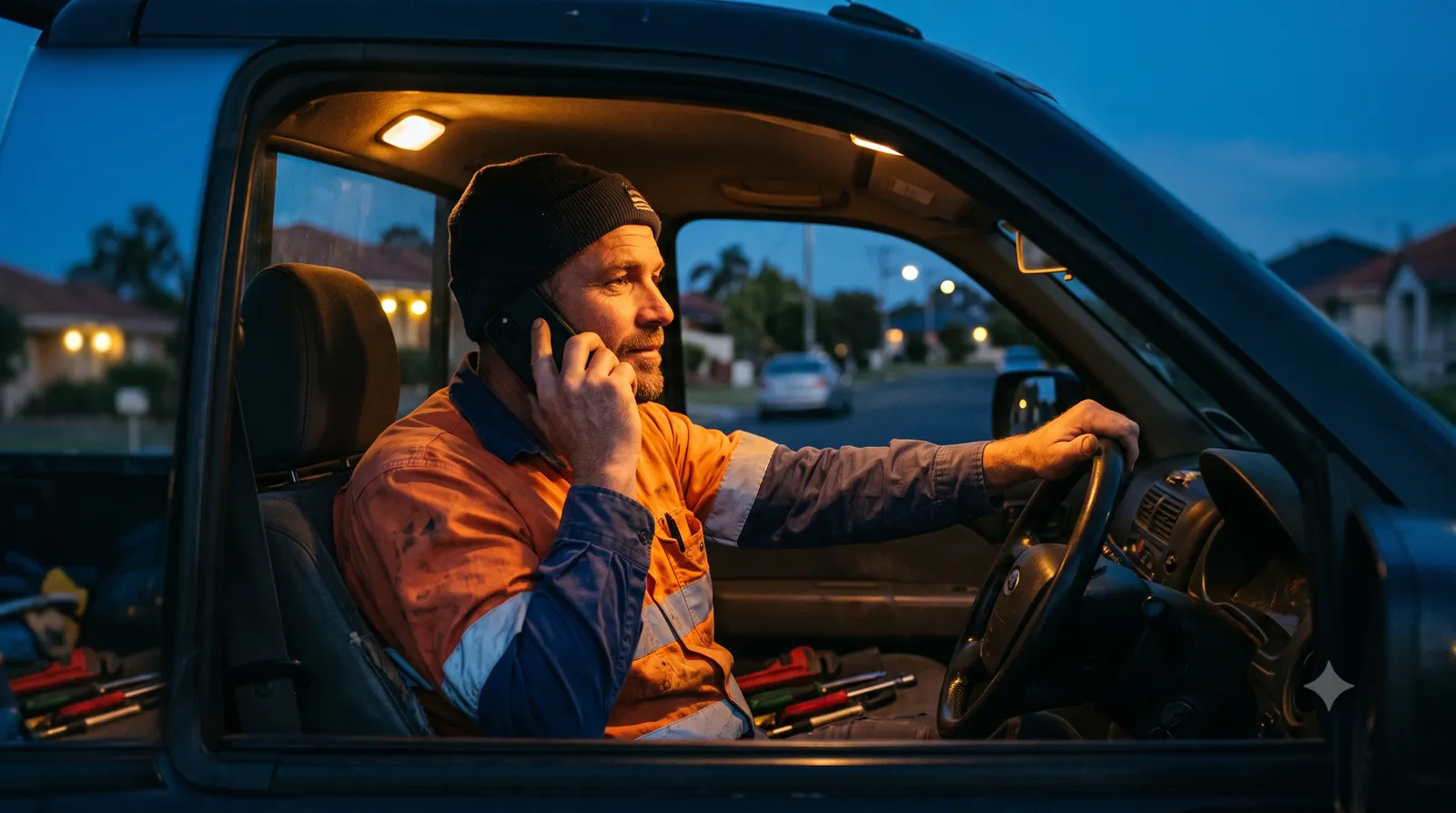
Electricians, like most trades, spend a good part of the day driving between jobs, which makes the car one of the most common places a customer call actually arrives. The road rules do allow some hands-free use, but the detail matters, and it varies by state.
Queensland's own guidance sets out that open and P2 licence holders can touch a mobile phone hands-free only if it's mounted in a cradle attached to the vehicle, and only for specific functions such as accepting a call, using navigation, or handling audio. The phone "must not obscure the driver's view of the road", and learner and P1 drivers under 25 aren't permitted to use hands-free calling, wireless headsets or the loudspeaker function at all, cradle or not (see Queensland Government: driving and mobile phones). Crucially, the same page is explicit that legal isn't the same as safe: "Hands-free use of a mobile phone can attract fines and demerit points for open and P2 licence holders, if the driver isn't in proper control of the vehicle or drives without due care and attention." In other words, a legal hands-free call can still get you fined if it costs you your attention.
New South Wales frames it the same way. Transport for NSW's guidance on mobile phones notes that a fully licensed driver may touch a phone secured in a cradle to make or receive a call, use navigation, or control audio, but adds plainly: "Using a mobile phone legally can still be distracting. Consider the traffic conditions before using your phone." (see Transport for NSW: mobile phones). Rules differ in their specifics between states and licence types, so it's worth checking your own state's transport authority rather than assuming another state's rules apply, but the underlying point is consistent everywhere: what's allowed and what's sensible mid-job aren't automatically the same thing.
Working at height
Answering a call on a ladder or a roof is a different risk conversation entirely, and it has nothing to do with whether the call itself is legal to take. Safe Work Australia's guidance on working at height sets out that a business must, so far as reasonably practicable, eliminate or minimise the risks of working at height, and where the work can't be done on the ground, must provide a safe system such as a fall prevention device, a work positioning system, or a fall arrest system, in that order (see Safe Work Australia: working at heights).
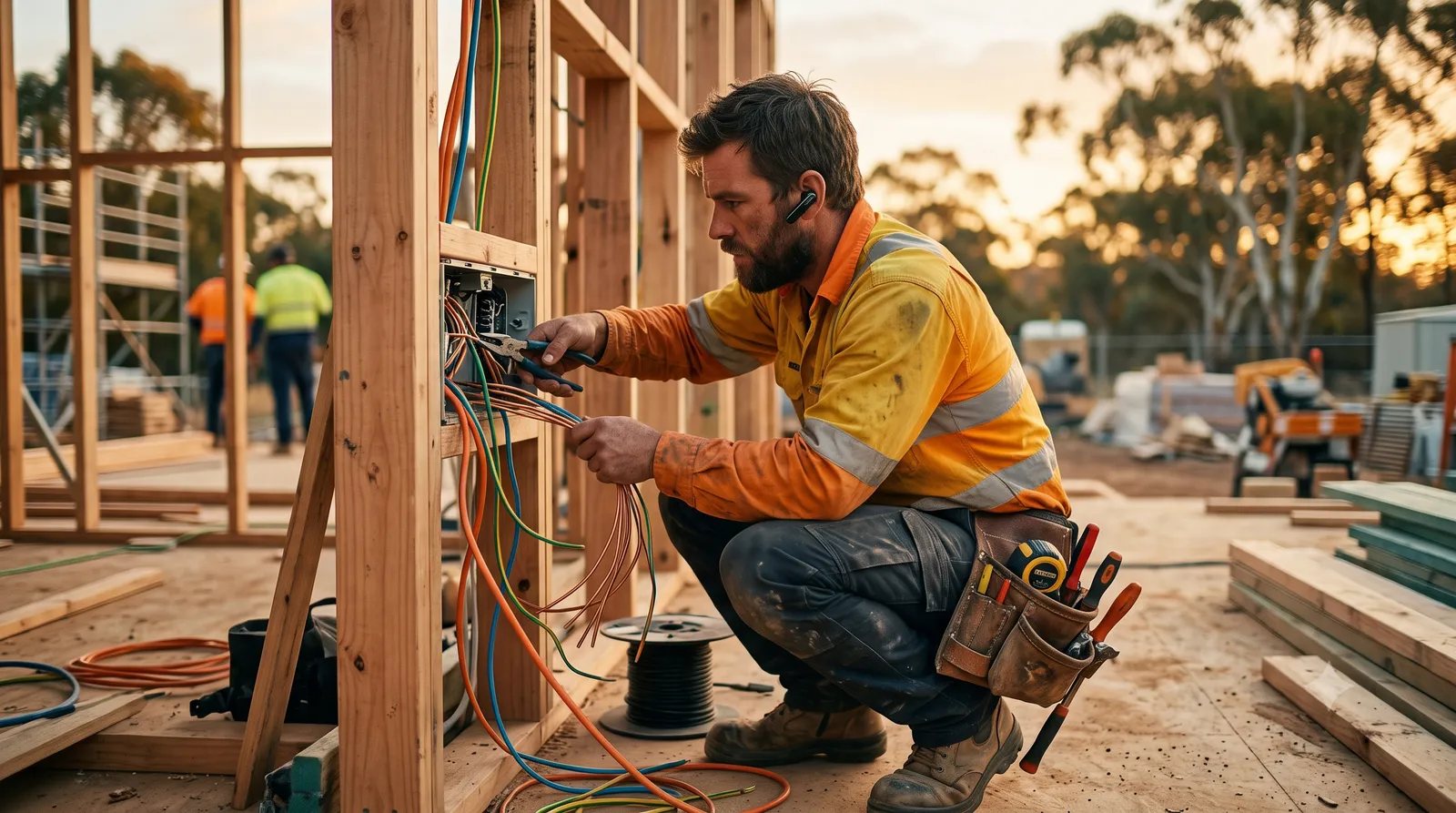
None of that guidance is written with phone calls in mind, but the logic applies directly. An electrician balanced on a ladder to finish a switchboard connection, or working off an elevated platform on a rewire, has already accepted a level of risk that safe systems of work are built to manage. Reaching for a phone, fumbling for a pocket, or losing a moment's attention to a conversation is exactly the kind of added risk those controls exist to keep out of the picture. It doesn't matter whether picking up would be legal. Physically, there often isn't a hand or a moment of attention to spare.
Live electrical work
Live or energised electrical work raises the stakes further again. Safe Work Australia is direct about this: "Electrical work is dangerous. As a person conducting a business or undertaking (PCBU), you have a duty to keep workers and your workplace safe from electrical risks." It defines an electrical risk as "something that can cause death, serious injury or shock" (see Safe Work Australia: electrical safety). Queensland runs a dedicated regulator for exactly this reason, the Electrical Safety Office, separate from the general workplace safety regulator.
A phone ringing mid-task on live or energised equipment isn't a legal question at all, it's a physical one. The task needs two hands, full attention, and no interruptions, whether the interruption is legal to take or not. The right response to a call arriving while working on anything energised isn't to answer it more carefully. It's to not answer it until the task is finished and the equipment is safely isolated.
Ordinary hands-on work
Plenty of jobs make answering impractical even when there's no law and no safety code involved at all. Gloves too thick for a touchscreen. Both hands occupied holding a fitting, a fixture, or a length of conduit. Ear protection or the noise of power tools making a phone call genuinely difficult to hear. Dust, grease or wet hands that make handling a phone a bad idea regardless of what's on the screen. None of this is about risk in the regulatory sense, it's simply that plenty of a trade's working day doesn't leave a spare hand or a quiet moment, and pretending otherwise doesn't change that.
Hands-free is not distraction-free
Put the four together and a pattern shows up. Driving is the one case where the law explicitly allows a hands-free call, and even there, the regulators' own guidance is clear that legal use can still be distracted use, and distracted use can still cost you. Working at height and live electrical work aren't really legal questions at all, they're physical ones: the job doesn't leave a hand or a moment of attention spare, and no amount of "it's technically allowed" changes that. Ordinary hands-on work adds a third category again, nothing unsafe about it, just impractical.
The common thread is that hands-free was never meant to solve distraction, only to solve where your hands are. What actually resolves the tradeoff is not needing to answer at all. That's the gap diverting the call is built for. frontdesq is Brisbane-based AI phone answering for Australian trades: your missed or diverted calls are answered 24/7, the caller is qualified with a few quick questions, and if it's genuinely urgent the call is transferred straight through to you rather than waiting. Everything else lands as an SMS summary, or a job already booked into your calendar, waiting for you when you're back on the ground, out of the switchboard, or off the road. Nobody has to choose between answering safely and answering at all. If you haven't set up where those diverted calls should go yet, our guide to call forwarding in Australia covers the carrier settings, and our piece on after-hours plumbing calls has more on what a good summary should capture once the call's been answered for you.