 frontdesq
After-hours answering for plumbers: what every call needs to capture
What an after-hours plumbing call must capture, how to judge urgency without diagnosing, and when to escalate to the on-call plumber.
Why after-hours plumbing calls are different
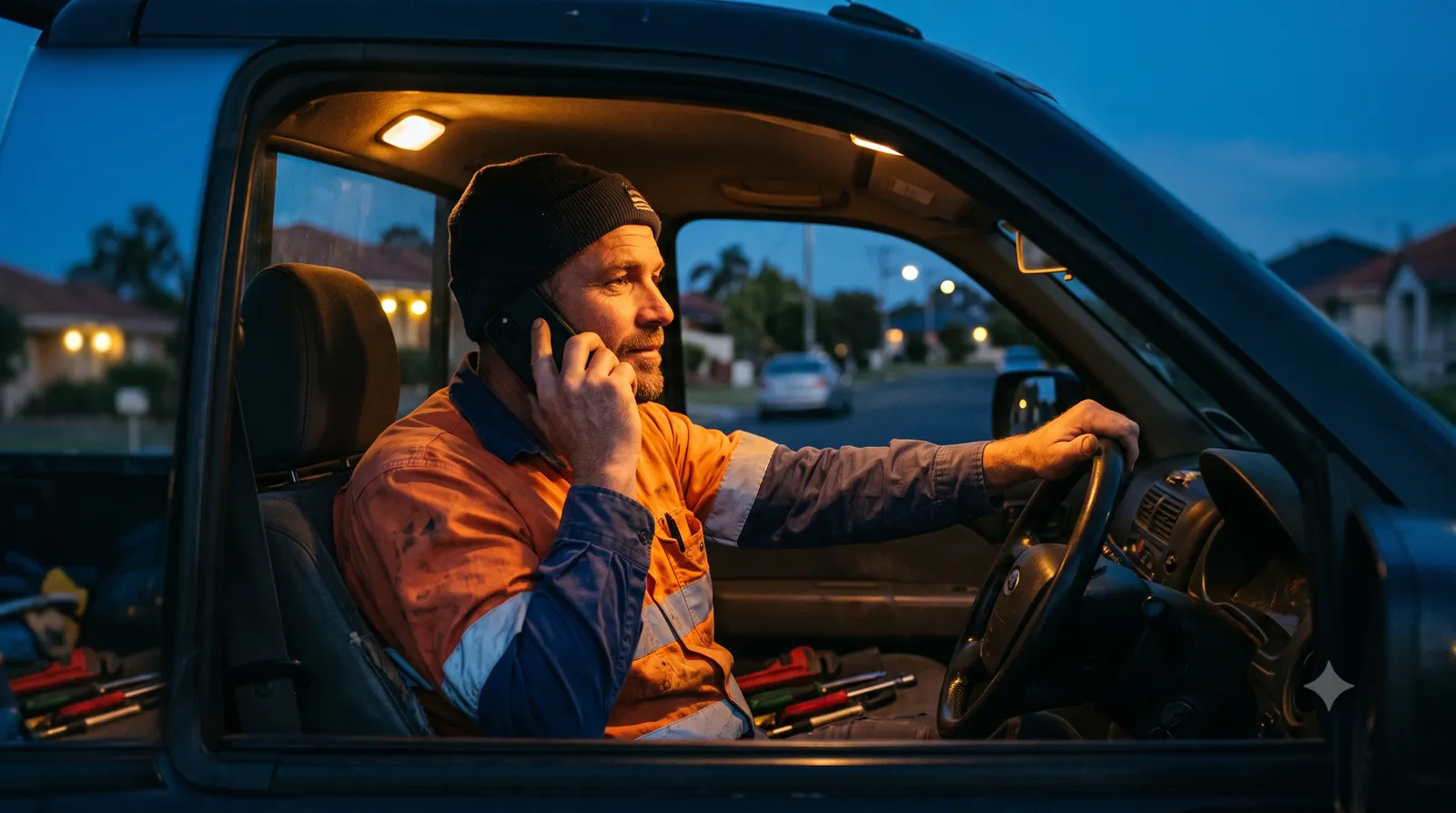
Burst pipes and blocked drains don't wait for business hours. A hot water system fails the night before a work day, a pipe lets go while a family's asleep, a drain backs up over a long weekend when nothing at the hardware store is open. A missed after-hours call is often the most urgent one of the week, not the least, and the person on the other end is usually already stressed before they've finished dialling. Miss it, and they're calling the next plumber in the search results within minutes, not waiting politely for you to open on Monday.
The facts every call must capture
Regardless of who or what answers the phone, four things need to come out of every after-hours plumbing call:
- The job. What's actually happening, in the caller's own words, burst pipe, no hot water, blocked drain, gas smell, overflowing toilet.
- The location. The full address, plus any access notes, locked gate, dog on the property, unit number, body corporate details.
- The urgency. Is water actively flowing right now, has it been like this for days, can it realistically wait until morning.
- Access. Is someone home now, is there a key arrangement, is it a vacant property or a rental where a tenant needs to be coordinated.
Miss any of these and whoever calls back has to ask them all again, which either wastes time on a genuine emergency or annoys a customer who already explained it once.
In practice that looks like a short, specific exchange rather than an open-ended chat. "Water's coming through the ceiling right now" tells you the job and the urgency in one sentence. "It's a rental, tenant's home, side gate's unlocked" answers access before anyone has to ask twice. A call that captures those four facts in under a minute gives the on-call plumber everything they need to decide whether to get dressed now or ring back at seven, without a second conversation to fill in the gaps.
Judging urgency without diagnosing
Sorting "can wait until morning" from "send someone now" doesn't require plumbing expertise. It requires asking the right questions and listening carefully to the answers, not guessing at a cause. Whoever or whatever answers the phone should never attempt to diagnose the plumbing problem itself, suggest a fix, or tell a caller what's safe to try themselves. That's advice, and advice from an untrained voice on the other end of the phone creates risk for the customer and liability for the business, whether the answer came from a person or a machine.
The one exception is a fixed, approved response for anything that sounds like a gas leak: the caller is told to leave the property and contact emergency services, with no troubleshooting suggested either way. That's a scripted safety instruction handled the same way every single time, not a judgement call, and it's the kind of thing that should never be improvised.
When to escalate, and what the summary should contain
Some things should always escalate straight to the on-call plumber: active flooding, no water or no hot water where a vulnerable occupant is affected, a suspected gas leak, sewage backing up into a house, or a commercial property losing trade. Everything else, a dripping tap, a slow drain, a cosmetic issue, can usually be logged for a call back on the next business day.
A useful after-call summary needs to include the caller's name and number, the job in their own words, the address and access notes, the urgency assessment and why it was judged that way, the time of the call, and anything explicitly promised to the caller, such as a call-back window. Leave any of that out and the plumber picking up the job is working with half the picture, and ends up ringing the customer back just to ask what should already be on the page in front of them.
Voicemail vs structured answering
Voicemail captures whatever the caller says, in whatever order they say it, with no guarantee the address or urgency ever gets mentioned at all. Whoever calls back often has to start from scratch before they can even decide whether the job needs someone at 2am. Structured answering, whether it's a well-briefed human or a properly configured AI service, asks the same four questions on every call, so the plumber gets a summary that answers "does this need me now" in the first ten seconds, not after a callback and a repeat conversation.
How an AI receptionist runs the workflow
An AI receptionist built for trades runs one approved script and asks the same set of questions on every call, rather than improvising. It flags calls that match the escalation triggers for an urgent transfer, and texts a summary the moment the call ends, or books the job straight into the calendar when it isn't urgent. Because it's working from a fixed script, it never strays into plumbing or safety advice, that judgement always stays with a licensed plumber. It's Brisbane-based, answers 24/7, and you can see how the whole thing works for trade businesses. Plans start from $249 AUD a month with the first week free, backed by the founder's promise: catch a paying job in your first week, or you don't pay a cent. If you're weighing it against other options, our checklist for choosing an after-hours answering service covers what to ask any provider, plumbing-specific or not.